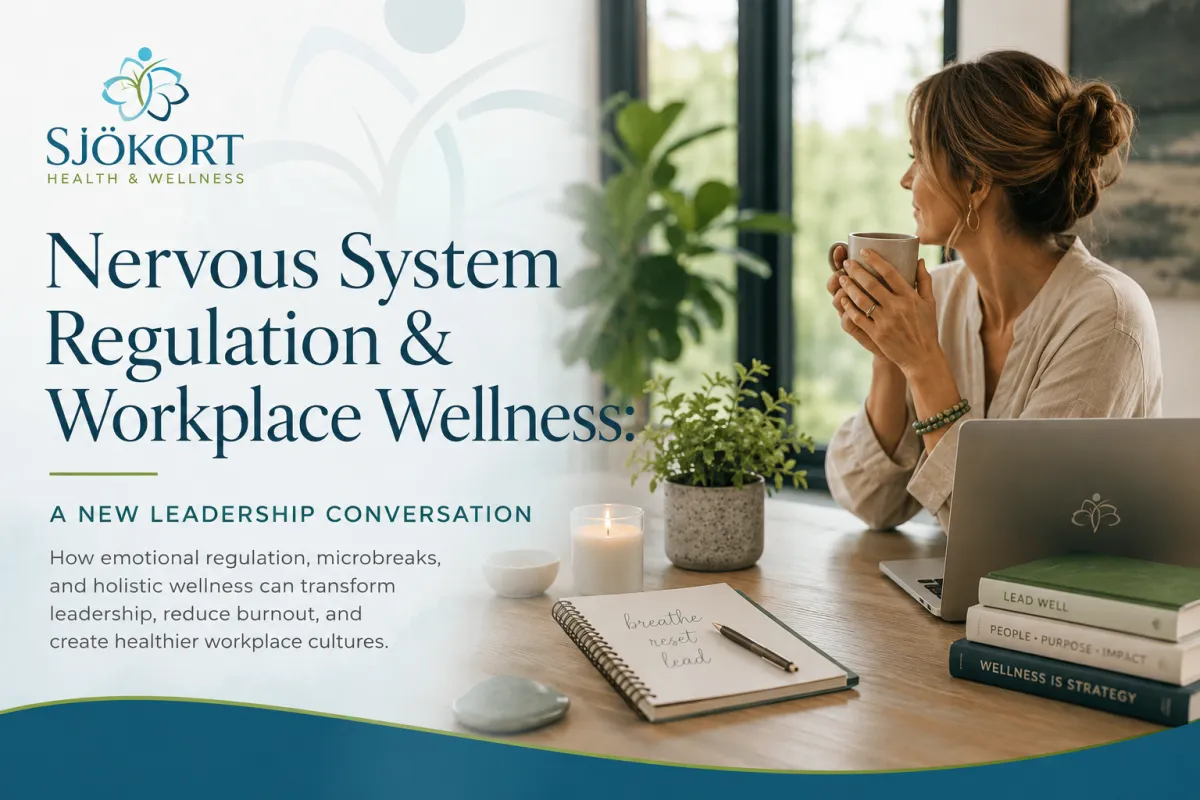
The Missing Piece in Workplace Wellness Programs
Nervous System Regulation, Leadership & Workplace Wellness: Why We Need a Different Conversation
Recently, I had the pleasure of joining the You Gotta NO! podcast for a deeply nuanced conversation about nervous system health, workplace wellness, leadership, and what it truly means to support people in sustainable ways.

You can listen to the full interview here:
https://www.youtube.com/watch?v=IT4RxjKbZSY&t=62s
You can also learn more about the podcast and their work here:
https://ygnpodcast.com/episode/holly-battrum
One of the reasons I appreciated this conversation so much is that it moved beyond surface-level wellness trends and into something more honest:
How disconnected many of us have become from ourselves.
What Does It Mean to “Listen” to Your Nervous System?
We hear the term “nervous system” everywhere now. But many people were never actually taught what that means.
At its simplest, the nervous system is our body’s communication network. It helps us interpret stress, safety, emotion, energy, digestion, sleep, creativity, and connection.

In modern Western culture, many of us live in a chronic sympathetic state — often called “fight or flight.” We stay in constant motion:
always producing,
always reacting,
always thinking six inches ahead of ourselves.
The challenge is that when this becomes our baseline, we stop hearing the quieter messages our bodies are sending us.
We forget to eat.
We don’t notice exhaustion.
We push through anxiety.
We normalize irritability.
We disconnect from joy, creativity, and presence.
This is where the concept of interoception becomes so important.
Interoception is our ability to recognize and interpret internal signals from the body. Hunger. Fatigue. Stress. Calm. Tension. Safety.
When interoception is impaired, we stop responding to ourselves appropriately. Over time, this can impact communication, leadership, emotional regulation, productivity, and overall well-being.
Emotional Dysregulation in Leadership
One of the most important parts of our conversation centered around leadership.

In many workplaces, leaders are being asked to guide teams while operating from a state of chronic dysregulation themselves.
The difficult reality is:
When we are dysregulated, we often do not realize it.
Instead, it can show up as:
reactivity,
lack of creativity,
poor communication,
decision fatigue,
chronic overwhelm,
unrealistic timelines,
or difficulty adapting under pressure.
We begin responding instead of reflecting.
And eventually, this impacts company culture, team morale, and organizational health.
Workplace wellness cannot simply be about adding another app, another seminar, or another checkbox initiative. Sustainable wellness requires us to address the human nervous system underneath performance itself.
Why Most Workplace Wellness Programs Fail
This was another important point we discussed during the interview.
Many organizations implement wellness initiatives while already operating in crisis mode. Employees are overwhelmed, leadership lacks capacity, and teams are being asked to “add wellness” on top of unsustainable workloads.
Without understanding the why behind behavioral change, implementation often fails.
In Traditional East Asian Medicine (T.E.A.M), we often speak about learning in layers:
first with the mind,
then with the hands,
and eventually with the heart.
In workplace wellness, many organizations stop at the first layer.
They introduce concepts intellectually but never create the conditions for integration.
True well-being requires:
trust,
consistency,
capacity,
leadership participation,
and individualized approaches.
Not every employee experiences wellness the same way. Different generations, personality types, nervous systems, and life stages require different forms of support.
Wellness cannot be one-size-fits-all.
Small Practices Create Significant Change
One of the themes I consistently return to in my work is this:
Simple does not mean insignificant.
In the podcast, we discussed practical nervous system tools that can begin creating change immediately.

One of my favorites is what I call the “30% Rule.”
The concept is simple:
Give yourself 30% more time than you think you need for a task.
Why?
Because most of us are chronically underestimating how long things actually take. We move through life in a heightened, compressed state, constantly rushing ourselves from one responsibility to the next.
Adding intentional space creates room for:
awareness,
emotional regulation,
clearer communication,
and more thoughtful leadership.
We also discussed the importance of micro-breaks throughout the workday — not as performative self-care, but as nervous system regulation.
These small pauses allow us to reconnect with ourselves before stress compounds into burnout.
If you’d like practical tools you can begin implementing immediately, you can explore my Microbreak Guide here: https://path.sjokort.com/microbreak-registration-sjokort-virtual
Wellness Is Personal — But Community Matters
One of the most meaningful parts of the conversation was discussing the difference between friendship and community in the workplace.
Community does not require oversharing.
It does not require becoming “family.”
It does not require forced closeness.
But healthy workplaces do require awareness of impact.
How we communicate affects others.
How we regulate ourselves affects others.
How leadership behaves shapes organizational culture.
A healthy company culture is not one where people never experience stress. It is one where people feel:
respected,
engaged,
emotionally safe,
and supported enough to contribute meaningfully.
We Need a Different Wellness Conversation
I often say that many organizations are talking about wellness without truly having the conversation.
There can be a great deal of “lip service” around mental health, burnout, and workplace well-being without meaningful structural support behind it.
But I do believe things are shifting.
People are asking deeper questions.
Leaders are becoming more aware of emotional regulation.
Employees are seeking more sustainable ways to work and live.
Organizations are beginning to recognize that nervous system health directly impacts performance, retention, communication, and creativity.
This work matters because people matter.
And while wellness is certainly not the only answer, reconnecting with ourselves is often where meaningful change begins.
Thank you again to the team at You Gotta NO! for creating space for this conversation and for helping bring language to topics many people are feeling but may not yet know how to articulate.
Listen to the full conversation here:
https://www.youtube.com/watch?v=IT4RxjKbZSY&t=62s
Learn more about the podcast here:
https://ygnpodcast.com/episode/holly-battrum
ARTICLE FAQ:
What is nervous system regulation?
Nervous system regulation refers to practices that help the body shift out of chronic stress states and into balance, improving emotional resilience, energy, and overall wellbeing.
How does stress impact leadership?
Chronic stress can reduce creativity, communication, emotional regulation, and decision-making abilities, impacting both leaders and workplace culture.
What are microbreaks?
Microbreaks are short intentional pauses throughout the day that help regulate stress, improve focus, and support nervous system health.
Why do workplace wellness programs fail?
Many wellness programs fail because they are implemented without addressing organizational capacity, leadership participation, and sustainable behavioral change.
How can holistic wellness improve workplace culture?
Holistic wellness approaches support emotional regulation, communication, resilience, and employee engagement, creating healthier workplace environments.
Learn more at Sjökort.com


